
Distology has been making waves – and winning awards – since it was founded
as a specialist cybersecurity distributor in 2014. From the outset, CEO Hayley Roberts and her senior management team have positioned Distology as a disruptor with a distinctive approach and ethos.
Today, it specialises in distributing solutions across three main areas underpinned by identity: workplace security (Okta, Yubico, IRONSCALES, Jamf, Echoworx); multi-cloud security (Okta, Auth0, Fortanix, ThreatX, Cyolo, Vercara); and cybersecurity operations (LogRhythm, Okta, Auth0, Verkada, Drata, Harbor, WithSecure).
In March 2021, the company’s European ambitions received a boost with investment from mid-market private equity firm NorthEdge, which has enabled it to grow its Benelux operations, including a move to new premises in Utrecht, and, in September 2022, to acquire Squareball,
a Berlin-based software engineering firm with a strong focus on identity and access management.
Squareball, now called Distology Studios, not only gives the distributor a foothold in the DACH region but also a 10-strong team of experts in software engineering, product design and solutions architecture that will enable it to provide partners with an expanded range of services
To find out more about what sets Distology apart, Technology Reseller met up with Chief Product Officer Lance Williams, who has just celebrated his two-year anniversary at Distology after 16 years at Softcat.
Technology Reseller (TR): For readers who may not be familiar with Distology, please could you give a quick overview of the company and explain how its approach differs to that of other distributors.
Lance Williams (LW): Distology is a European cybersecurity solutions provider and distributor. I put the words in that order because we’re focused on developing a capability to serve people who need help with cybersecurity solutions, and we happen also to distribute.
The channel is persisting with a vernacular that has suited it for the last three decades, where you have definitive lines between the vendor, the reseller and the distributor, but the world is changing due to the fast evolution of the cybersecurity threat.
Our entire brand is disruptive because we’re a solutions provider that sells through the channel. Calling us a distributor instantly puts us in a pigeonhole, when in reality we have a specialist sales team that in partnership with the solutions engineering team can talk to end customers and qualify opportunities on behalf of resellers and vendors, as well as a great alliances and marketing team and now a highly reputable services team based in Berlin.
A large organisation like Softcat might have 2,000+ employees, but if they don’t have a deep specialism in identity they will need support from a company such as Distology to provide specialist support during conversations with their customers. A smaller organisation, like Highgate IT Solutions, a focused IT reseller, may require assistance from Distology in alternative ways, such as providing technical skills to help with customer calls. That capability is central to what Distology is today.
TR: Isn’t what you offer what some people would call value add?
LW: It is, and we would happily take on the VAD acronym. However, that too has been damaged over time. Every distributor wants to call themselves a VAD, but hiring a pre-sales person to cover 200 vendors isn’t value – it’s just somebody who struggles with technical depth of expertise. And in my experience a lot of distributors still don’t open themselves up to support resellers with their customers.
There are pockets of brilliance, particularly amongst smaller specialist distributors, but I know from my time at Softcat how frustrated I could get with the distribution channel in general. I joined Distology because I saw they were on a disruptive path.
TR: What else attracted you to Distology?
LW: I wanted to leave Softcat, which I joined in 2005 when it had around 100 employees, and work for a smaller company, so I got in touch with Hayley, who I‘d known for 12 years from her days working at Altimate (later bought by Arrow), to ask about up and coming vendors.
Instead of recommending a vendor, Hayley surprised me by inviting me to join Distology instead. The reason for the move really resonated with me. She said: “Lance, I want you to come here and make your imprint on Distology because I want to build something that feels more special than your average IT company. I know everyone says that, but I genuinely mean it. I want people who don’t necessarily know they want to work in the technology sector to feel included and welcome, and to do that we’ve got to make a very diverse place and embrace people from all walks of life.”
Coming from a huge company to somewhere much smaller where you can make a difference and see that difference happen very quickly was a big attraction.
 June 1 was my two-year anniversary at Distology and I can safely say my time here has been everything I thought it would be and more: we’ve made an acquisition; we’ve gone into Germany; the Netherlands is going well; we’ve got a services business we didn’t have previously; and we’ve got really, really great people. I love working with Hayley and the rest of the leadership team.
TR: Has Distology been successful in attracting people who may not have considered a career in IT before?
LW: Yes, we have. If I think about our Berlin team, the last identity engineer we hired there and are now training was a web developer. You could say she was already in a technical role, but web development is actually very different to identity services engineering.
Our Marketing Director had never worked in the technology sector before – she had been doing marketing for a commercial property company. Our Senior Solutions Engineer was a teacher. One of our top sales people in the UK came from a furniture company.
We’re saying ‘It doesn’t matter what your background is. If you’ve got transferable skills, this is just another set of knowledge you need to learn. IT is fast moving and exciting, it’s rewarding at a financial level and you get lots of great opportunities for travel and so forth’.
TR: What are your responsibilities as Chief Product Officer?
LW: My headline role is a visionary one. I was hired to help shape the strategy and the direction of the company so that we’re still relevant in 5 to 10 years’ time.
When we have our executive leadership meetings, Hayley leads from the front, I look at why we should do something and the conceptual hypothesis around it. Then the rest of the directors and leaders work out how we’re going to do it and turn bright ideas into reality. It really is a brilliant team of minds, which I love working in. By trading off the two, we end up making the right decisions on which initiatives to follow. That’s a big part of my job: where are we going and what do we need in our portfolio to be attractive to customers?
Then, there’s the story that goes around that. I lean very heavily on the Marketing Director to bring that to life, but I set out the vision and story for why we’re doing things.
More functionally, I’m responsible for our technology and services alliances; I’m responsible for our internal IT; I’m also responsible for our solutions engineering team. Those are all bridging roles between other teams both in and out of Distology. We’re setting out to be a disruptive company that’s diverse and inviting to anyone, however they need to work.
Running an ‘IT service’ as opposed to an ‘IT department’ might sound nuanced, but IT departments are often traditional – you have an IT Manager who does what’s in front of them and does what they’re asked to do by the IT Director.
An IT service is all about helping people to work more effectively. Chris, our IT service lead, spends as much time talking to people about what they need and how he can help them to do their job better as he does on more traditional IT management roles.
It’s the same with solutions engineering. They work into our technology vendors to help them to understand what we can do; they work into our internal team to help them to learn about the technology; they’re training the channel; and they’re also jumping onto calls with partners’ end customers.
The alliances function is very similar. Our lead solutions architect from Berlin says there’s no such thing as no design, there’s just good design and bad design. Our alliances team are all about holding that design and making sure that what we set out to do through our technology and services partnerships actually works for our channel partners and for our internal team.
TR: Has your vision and/or strategy changed in the last two years?
LW: I’d say it’s crystallised. When I arrived, my job was to create some sort of story because there wasn’t one that we could grow from; there was just a list of products, which I couldn’t really see any connections between. We’ve taken the cybersecurity landscape and made it really simple for everybody to understand, with specialisms in workspace security, multi-cloud
security and the IT management of those environments, with identity as a fourth specialism across those three areas. That has become our framework.
What we realised is that when you’re talking about technology products a story can hang all those things together, but in reality it doesn’t do anything at a technical level to bring those things together, which is why having a services team is so important.
In my first year the core question was do we build or buy? I quickly realised that the answer was to buy because it takes a long time to build a services capability and people with technical talent want to work with other technically talented people. If you’re a distributor, how do you build that team in such a competitive recruitment market? The acquisition route has enabled us to take a brilliant team as a unit and build on our framework with services.
Now, it’s all about geographic expansion. We launched in Berlin, which is our foothold in the DACH region. We’ve got Benelux covered with the Utrecht team. We want to go into the Nordics – and a good portion of our portfolio is willing to support our move into that region.
TR: Why did you buy Squareball, a German company, rather than one in the UK?
LW: When we were reviewing our options, we did look at all kinds of organisations in the UK, but we just didn’t find any that fitted with our needs and culture. At the same time, we had requests from a few of our technology vendors to enter Germany and realised that we could either buy a small distributor in Germany or buy a services company in Germany and build a distribution capability on top of that.
In the end, Squareball and Distology were uncannily well aligned; the values were very similar; they were already working very heavily in the identity space with Okta; and they came with glowing feedback from their customers and the vendors they worked with.
TR: So is Squareball, or Distology Studios as it now is, going to be providing services for your operation in the UK as well?
LW: Yes, we’re going Europe-wide with a services centre of excellence for cybersecurity. That centre of excellence is going to be built on identity services to begin with, because that’s where the team’s pedigree is, but they also major in product development, building web applications and other applications for significant end customers like Flink the grocery delivery company.
The question for me was how to make a company that does identity services and product development work fit with a cybersecurity company.
When I got into it with Martyn Roberts, our services director and owner of Squareball, I discovered that what they were consistently praised for by customers and vendors was their clear focus on the user experience (UX) and user interface (UI). UX is all about research. The customer can’t tell you what the problem is, because they don’t necessarily know or they identify it incorrectly, so UX spend a lot of time really building out the picture of what they’re trying to solve before UI come along and design the front end for it.
As an industry we are guilty of turning up at the customer, knowing what we want the answer to be, listening to a few of their leaders and then saying ‘you need to buy this to solve all your problems’. The client buys it and then six months later, it is no longer working as effectively as it should because the customer has moved it from the best practice implementation you delivered.
The real strength of the Distology Studios team is its methodology, its approach to listening, learning, architecting and, most importantly, delivering better outcomes.
 TR: Has Distology Studios been a big commercial benefit for you?
LW: In the sense that they’ve got their existing customer base, which obviously brings new revenue into the business. But no one buys a business just to keep it the way it is, and nine months in we’re getting ready to launch a bunch of new services that will be available to our UK partners.
Distology Studios is already a good addition and will become an even better one as the months and years roll by.
TR: What achievements in your first two years at Distology are you most proud of?
LW: As I’ve explained, my first year was all about setting out our new go to market, our three specialisms with identity as a loose fourth sitting in the middle.
My second was all about pivoting the sales focus from a ‘help to sell’ to a ‘sell to help’ mentality i.e. moving away from a preconceived idea of what you want the customer to buy to asking open questions to help qualify something and only positioning technology when it makes sense to do so.
To that end, we’ve delivered over 260 channel enablement sessions in the past year and over 120 additional engagements into end customers. In the previous year, we were probably only doing a couple of engagement sessions per month.
This year is all about getting ourselves into the customer and I’d love the team to more than double the number of end customer engagements we do to generate end customer sales and support for our channel partners as an extension of their teams. That’s a big focus for us. You can’t call yourself a solutions provider unless you’re working with customers – as long as it’s with our channel partners in our case!
TR: What impact have these initiatives had on Distology’s revenue?
LW: Revenues were up 43% year on year from FY 22 to FY 23, which is very good in the current economic climate.
Growth has come from broadening our portfolio and deepening our relationships with partners. The number of partners that buy more than three business lines from us has increased from 3 to 20 in the last year, so there’s a lot more depth.
In addition, the new technologies we have brought in have increased our attractiveness as a solution provider and helped with revenue and profit which is obviously the whole point of bringing them in.
TR: How do you choose which vendors to work with?
LW: Between us, Hayley and I probably get two or three requests a week and the first thing I do is look at the gaps in our offering because we have a non-compete ethos
in the portfolio. A little bit of overlap is unavoidable, but we are not interested in vendors that do the same thing.
I look at things like the financial position of the business. How many rounds 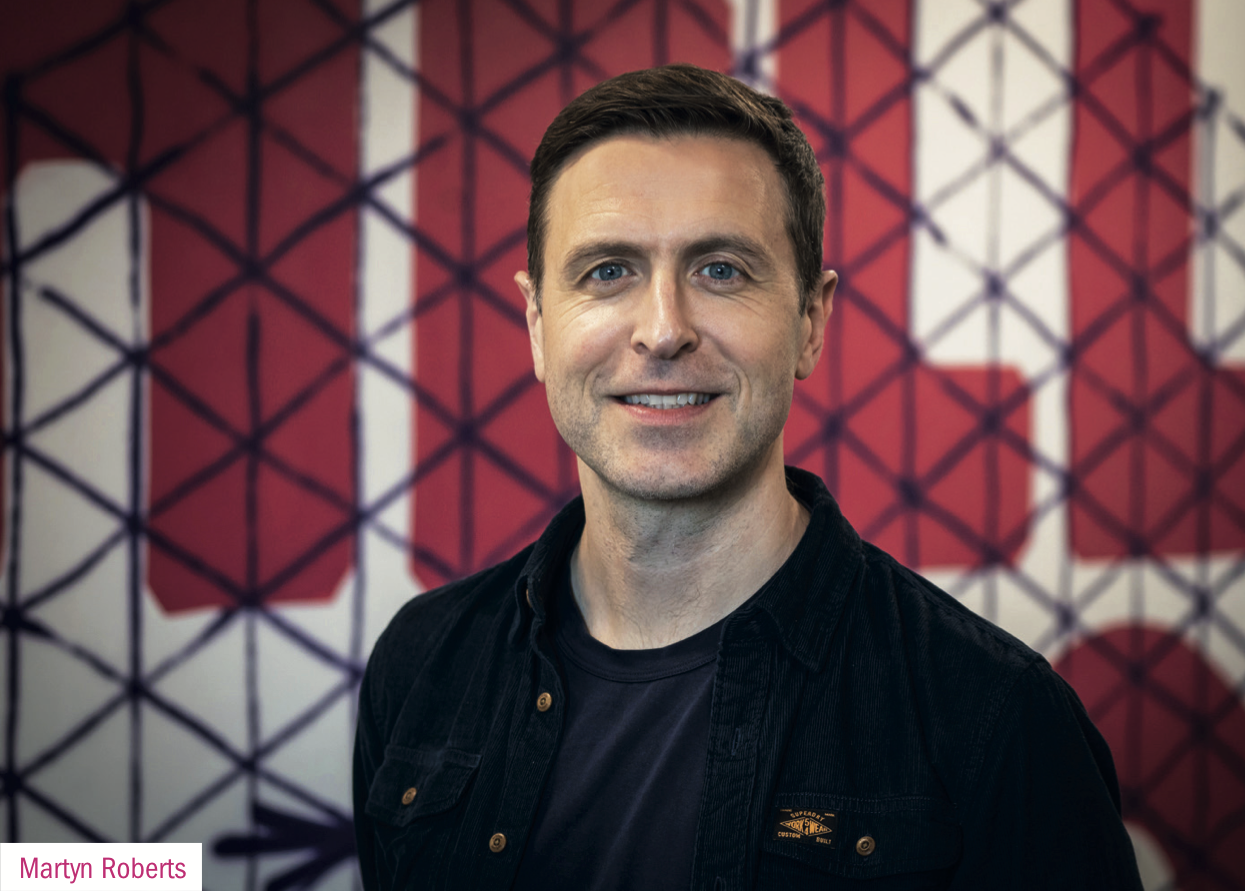 of funding have they had, if any? Most channel resellers won’t be interested in working with leading edge technology, unless it’s at least Series B. If you are in Series A funding, it doesn’t matter how good the technology is or how strong the proposition is, channel partners are unlikely to engage with it.
From there, I will look at measures like how much the vendor has invested in the region, their brand identity, whether they have a dedicated marketing budget for the region or country, how many partners they have and how many customers they’ve
got. Then I’ll look at whether they’ve got a channel programme and the sort of margin channel partners can expect.
The final measure and arguably the most important one is the people. We
like the people we work with to have the same attitude to life as us, and we truly believe that a productive and successful partnership is based on a good relationship.
TR: How have your previous 16 years at Softcat helped you in your new role at Distology?
LW: Massively. At Softcat it was all about generating as much empathy as possible for the end customer. The end customer comes in all different shapes and sizes, so being able to adapt and be the right person for each end customer was critical. I now have that same attitude in my dealings with customers in the reseller community and the vendor community.
For my first 10 years at Softcat I worked directly with vendors in the alliances part of the business, learning a lot from James Baker, who was Alliances Director and is now the MD for Cloud at Giacom. For my last six years I was involved in setting up and running the services portfolio management team. That was all about product management, product design and product marketing, which is exactly what I am doing at Distology – What is it that Distology does? What are our products? Who are our customers? How do we best communicate with them? The job I do now is really a culmination of everything I have done in my career to date.
TR: Apart from engaging more with end customers, what do you hope to achieve in your role in the next 12 months?
LW: Regional parity. We have a very well stocked UK and Ireland portfolio. We
have a slightly less well stocked Benelux portfolio and in Germany we have a handful of vendors who are prepared to go to market with us in that region.
I would love us to create parity so that our regional sales teams across Europe can take out the same proposition and then, from Germany, extend our services reach across Europe, so that our partners across Europe have the same access to the specialist services team we have there.
TR: Is the disparity that exists because vendors have alternative distributors in those regions?
LW: Sometimes, and sometimes it’s just because the vendor hasn’t extended themselves there. Many vendors choose the UK as their jumping off point and then they go from the UK into the Netherlands because it has a very similar economy and buyers. They go from there into Germany and then into the Nordics. Our growth to date has been aligned with that pattern.
Equally, we want to deliver a good quality product in the regions we’re in. This time last year the Benelux team was just three people, and three people can’t take 12 vendor propositions out to market in any meaningful way. That team is now
8 people, which gives us a much better reach across the specialisms we have. It’s a similar situation in Germany. The handful of vendors we have there is perfect for now – any more and we would need more sales heads.
The services team there are already expanding their capabilities into the cybersecurity market holistically, by extending the brilliance they have in orchestration and automation from their product engineering background into cybersecurity. Customers have lots of products, but how do those products bind together? Most of the time we throw people at the problem, but there’s a skills shortage so you need to get more out of less which you do through automation. But you can’t just buy an automation product; you’ve got to work out your workflows and the processes that work into that. That’s a good area of investment that our services team will go into across Europe.
TR: Finally, how is the role of the distributor changing?
LW: The big question on all our minds is downward pressure from Amazon Marketplace. Microsoft will double down the pain of that because once they go through the gears, which is inevitable,
and start providing ISV solutions via their marketplace, AWS Marketplace and Azure Marketplace will become the transactional end of that distributor equation.
The channel ecosystem is very balanced: distributors do the job of the aggregator, the educator, the transactor, the currency mover, the promoter etc.; and resellers do more promotion, more aggregation into end users and of course sales and marketing.
As with any ecosystem, dropping in a new predator throws everything off-balance. However, at Distology we believe competition is a positive for the business. It makes us critically evaluate our service and keeps us proactive and eager to innovate. We know that vendors won’t get the value that they need from the Azure or AWS Marketplace, so how do you continue delivering what they need to get noticed, recognised and on board with the channel? That is the big question mark.


Be First to Comment