
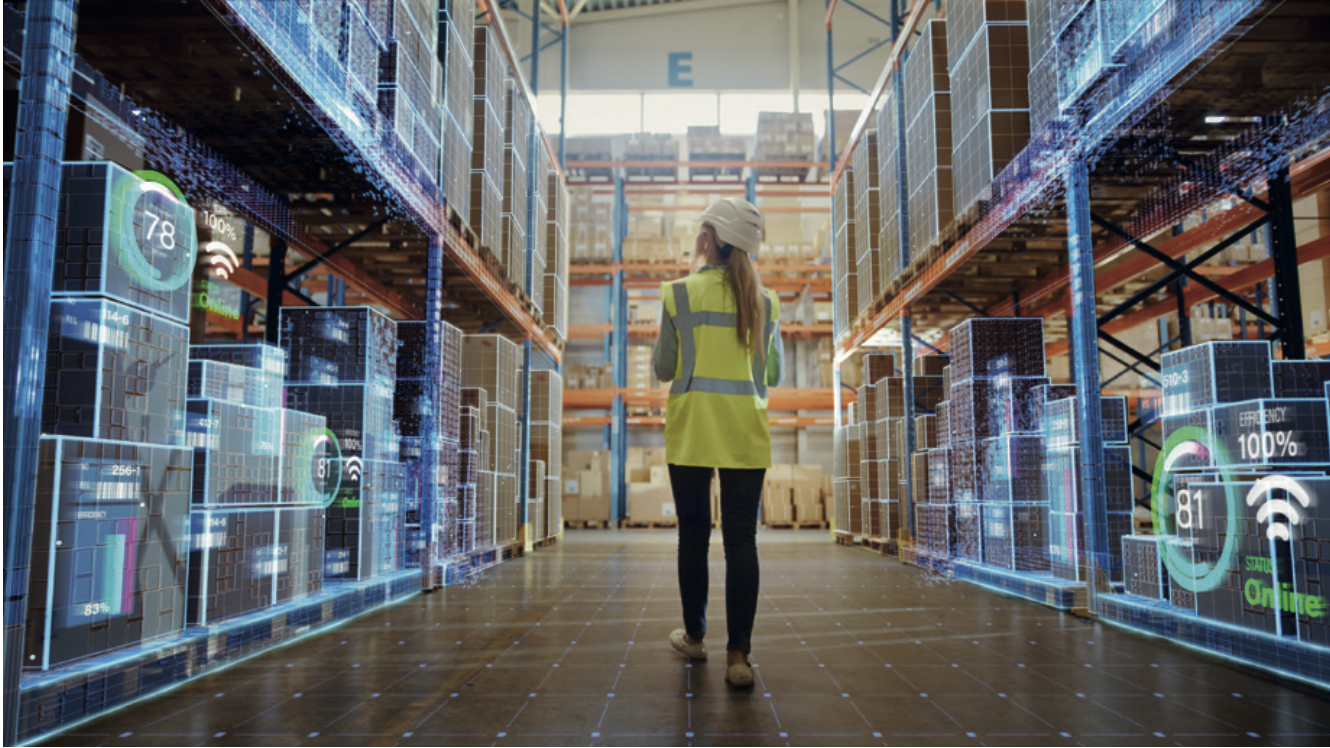
Fifty years after the invention of radio frequency identification (RFID), could 2023 be the year when the technology really takes off?
Phil Reynolds, EMEA Desktop Print Product Manager at Zebra Technologies, certainly thinks so. He told Technology Reseller that demand for RFID technology was ‘growing exponentially’ as the cost of chips falls and their capability goes up.
“The other thing that’s driving adoption of RFID is the rise of omnichannel, where customers might buy online and select home delivery or choose to pick up items in-store, and perhaps return them in-store as well. No longer is it a case of the warehouse holding the stock and the store selling the stock.
“To be agile, you need visibility and traceability. You need to know where your stock is, and RFID can give you that in almost real-time,” he said.
Reynolds’ analysis is borne out by Zebra’s newly published 2023 Global Warehousing Study and associated survey in which 58% of warehouse decision-makers said they plan to deploy RFID technology by 2028 to locate and track assets, people and goods and to address key operational challenges in warehouse environments.
Foremost amongst these is returns management, cited by 43% of warehouse decision-makers in Europe – up 12 percentage points compared to the 2022 study.
RFID chips within labels also have productivity benefits in retailers’ bricks and mortar outlets, for example by enabling shop staff to use a Zebra scanner or mobile computer to scan all items within range simultaneously. Not having to scan the barcode of each item individually can dramatically speed up stock-taking.
Other areas of investment highlighted by the survey of 1,400 warehouse workers and decision-makers include:
+ Inventory management.
Nearly 80% of those surveyed cite inaccurate inventory and ‘out of stocks’ as a drain on productivity, with 94% of European decision-makers planning to invest in technology to increase visibility across the supply chain by 2028.
+ Warehouse automation.
More than two thirds (69%) of warehouse decision- makers have automated or are planning
to automate workflows by 2024 to reduce errors, boost productivity and enable warehouse workers to be redeployed in more customer-centric, high-value tasks.nIntelligence. More than half of surveyed decision-makers plan to implement machine learning (52%) and predictive analytics (59%) in their facilities by 2028.
As a global market leader in label printing, mobile computing and scanning, Zebra Technologies and its worldwide network of 10,000-plus resellers are well placed to help not only logistics companies achieve their aims but organisations in other sectors that are investing in technology to digitise their operations and remove the waste, inaccuracies and inefficiency of manual processes.
Experience centre
Technology Reseller gained insight into some of the ways Zebra is doing this when it visited the Zebra Experience Centre (ZEC) at the company’s Bourne End EMEA HQ.
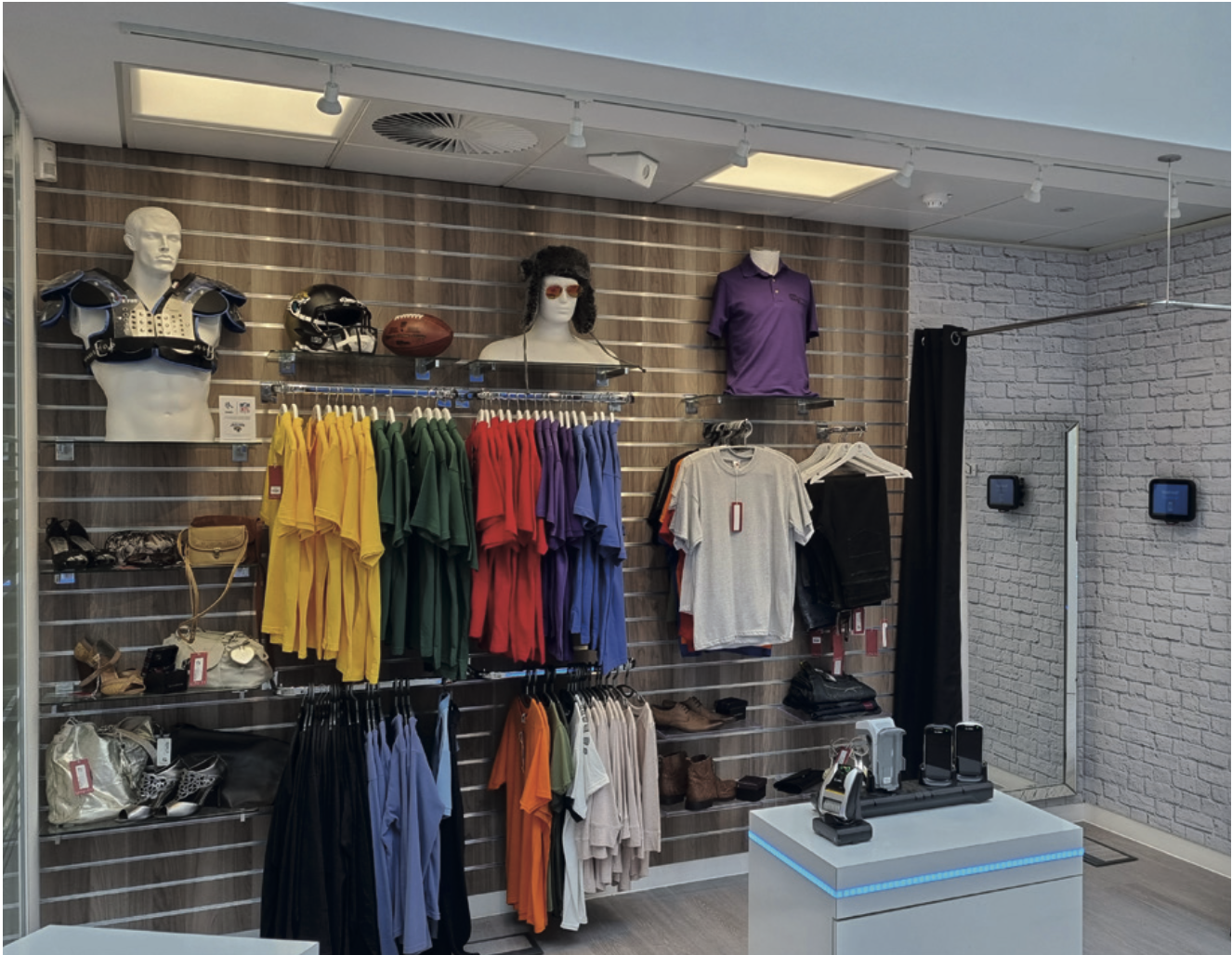
Opened six years ago, this facility provides a showcase for the company’s expanding portfolio of products and solutions, including barcode/label/ receipt/card printers, supplies (off-the- shelf and custom-made labels and chips), barcode scanners, mobile computers/ tablets, wearables, retail software and machine vision solutions.
A series of tableaux illustrating applications of the devices (and supporting technologies like RFID) in healthcare, retail & hospitality, transportation & logistics, manufacturing and field mobility reinforce how ubiquitous Zebra devices have become in an era of digital transformation and process automation.
They also show the extent to which Zebra devices, supplies, technologies and software (and solutions from third-party ISVs) all work together to boost efficiency and minimise waste.
This has been a key driver for the company since 2014 when it acquired the enterprise business of Motorola Solutions, supplementing its barcode scanner/printer business with the latter’s scanners, mobile computers and associated technologies, notably RFID and asset tracking, enabling it to offer complete end-to-end solutions for the first time.
“We provide the labels and the cards; we provide the printers that can print or encode them; and we provide the mobile computers, barcode readers and antennas that will scan them,” said Reynolds.
In the last 10 years Zebra has built on this capability with further acquisitions including those of Temptime, a manufacturer of colour-changing technology for labelling time/temperature- sensitive food and medicine; retail software company Reflexis Systems; consumer packaged goods and retail AI demand forecasting platform Antuit; machine vision company Adaptive Vision; and Matrox Imaging.
Reynolds points out that for this reason Zebra likes to focus on applications and the business case when engaging with customers, rather than taking a product- led approach.
 “With our printers, for example, we don’t refer to printing so much as asset identification and tracking. Mostly what we are doing is applying labels to assets for those purposes – boxes, pallets, PCB boards, you name it. And we don’t just do printing; our devices can encode data onto magstripes and RFID chips as well. Zebra is really all about building the business case to become more efficient and effective.”
Reynolds cites a case Zebra is working on for a large UK retailer that highlights the benefits of switching to linerless (backing- free) labels to remove a large volume of material from the waste stream.
“This retailer has a team of people whose function is to collect and take away the discarded backing from used labels in their warehouses. Switching to linerless media gives that resource back to the business to redeploy in activities that add better value.
And without the backing, rolls are a lot smaller and take up less storage space. So, on top of the green message, this is becoming quite an interesting productivity business case.”
Another example of how Zebra is enhancing its devices to bring process improvements, in this case to courier companies, is the addition of a ‘time of flight’ sensor to automate the dimensioning of packages.
“The courier captures an image of the package, and the mobile computer measures the length, width and depth of the package to facilitate improved loading and accuracy of shipping charges. This can help in optimising operations and allows a business to capture and send dimensioning information further upstream. With Zebra Pay, Zebra’s new enterprise mobile payment solution, you can now use the same mobile device to take the customer’s payment.”
The latest addition to Zebra’s portfolio, Zebra Pay is an integrated, enterprise-grade mobile payment solution that transforms the company’s TC5x and TC7x series mobile computers and ET4x tablets into secure payment terminals for the retail, hospitality, entertainment, field mobility and logistics industries, with support for all major credit cards and payment technologies, including NFC-contactless tap, chip and magnetic stripe.
Opportunities for MSPs
For managed service providers (MSPs), Zebra’s portfolio provides a potentially lucrative source of revenue from hardware, software, accessories, supplies and servicing, as well as the ability to add value to existing customer relationships and address new business opportunities.
This could be something as simple as supplementing an office-based fleet of printers/MFPs with Zebra devices for ID card/ label printing or the tracking of files, equipment and other assets, or something as complex as business process redesign in logistics and manufacturing organisations.
To find out how Zebra solutions and technologies can help your customers with their digital transformation – and help you to attract and win more business – a visit to the Zebra Experience Centre is highly recommended.
To find out more about partnering with Zebra Technologies or to arrange a visit to the Zebra Experience Centre, please call 0800 328 2424 or visit www.zebra.com.


Be First to Comment