
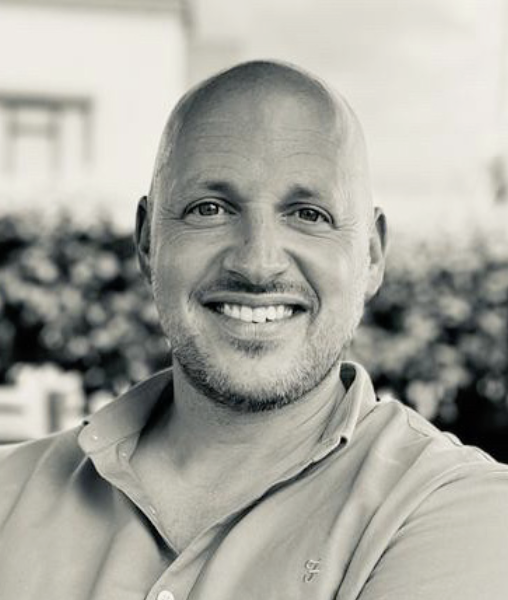
Voip Unlimited, the channel-only wholesale provider of UC and connectivity products and services, has been signing up resellers left, right and centre. In this Q&A, Founder and Managing Director Mark Pillow and Head of Sales Paul Gibbs explain why. From ownership of its own voice and data network to a 24/7 online partner portal and great choice of products, Voip Unlimited gives partners everything they need to stand out in a competitive market. Backed up by in-house development capabilities and a real love of technology. As Mark says: “We love the difficult projects that resellers bring to us.”
Technology Reseller (TR): Voip Unlimited provides a range of voice and connectivity solutions, including UCaaS, SIP, broadband and Ethernet. Since it was established in 2006, it has prided itself on being a very technical business and that includes having its own IP voice and data network. Why is that important for your channel partners?
Paul Gibbs (PG): We’re in a minority now of companies that own and run their own network. The benefit for resellers and potential new channel partners is the fact that because we own and run
our own network, we can shape products and services in line with market changes and market tailwinds. We look at what’s happening in the market, what the requirement is, and we work with resellers to try and build products that are slightly different from the norm.
Mark Pillow (MP): We run our own dev team, our own voice developers, our own web developers, our own platform developers. We’ve got our own network engineers, sys admins, DevOps, the whole kit and caboodle basically. My provisioning manager has got over 25 years’ experience and knows the industry like the back of her hand, so we are our own provider when it comes to number porting. We run our own porting codes. We can pretty much do whatever is required of us.
TR: I know from speaking to you before that another big benefit for partners is the ability to access a wide choice of products and services through a single portal.
PG: One of the biggest things we hear from new partners, and our existing resellers, is they really like the fact we’ve got one portal and that one portal serves all of our products. That really does differentiate us because you’d be amazed how often customers of a company that might have grown through acquisition have to go onto different portals.
With us, you don’t have to do that.
We spend a lot of time building APIs into providers and making sure our customers can really self-serve. Our vision is to enable you to trade with us on our portal at any time of the day.
That said, we are not like certain people that have really majored on self- serve. We want our portal to be self-serve, but we don’t want to lose that personal touch. We’re not the biggest company and I think people like the fact that they can get all our products and services on our portal but also know there’s someone on the end of a phone. They can phone me, they can phone Mark, they can phone anyone in the organisation and we’ll pick up the phone and have a chat with them. That, in this day and age, is a big differentiator.
TR: You mention feedback from new partners. Are you actively expanding your reseller base?
PG: Yes, very much so. Quite aggressively. We’re a channel-only business and historically that’s been built around the dealer channel – people that trade with us, IT companies that come to us and
that we work with as dealers. We’ve really built our portal for resellers, the wholesale community, and that’s grown exponentially. Since just before I joined, we’ve enjoyed double-digit growth in reseller recruitment every single month.
TR: Is that because Voip Unlimited has a higher profile now or is it because connectivity has become so essential?
PG: Brand awareness has been a big thing for me. I joined Voip Unlimited about a year ago and at the time people’s perception of who we were and what we did was probably not correct. So we have spent a lot of time shaping our outward offering, making sure people understand that we are a channel-only wholesale provider and that we offer a range of products and services in one place. We’ve spent a lot of money on advertising and events and we’re starting to reap the rewards now, which I’m very grateful for.
TR: Meanwhile technology keeps moving forward. Are you continuing to add to your portfolio of solutions?
MP: Yes, we’ve got a lot of products in the pipeline. We ask resellers we are close to what their needs are and what trends they’re seeing and we play around with technology. We like to push technology to the limit. I love to learn and we love the difficult projects that dealers bring to us. We do some really seen a lot of the providers out there but I’m proud to say that our solution is award- winning and we’re winning a lot of resellers based on the product itself. So, yes, it’s an exciting time.
TR: One of the strengths of Voip Unlimited is its broad product and services offering, but within that you also provide choice.
MP: We have two UC platforms and we have four SIP Trunking platforms. We’ve looked at the market and recognise people use different products for different reasons and have built products to fit those requirements. If we see something in a competitor’s product that we think is a good idea, we’ll build something similar. We don’t buy products off the shelf. We build a platform to requirements and then occasionally someone comes along and says ‘wouldn’t it be good if we could do this?’. Then, we’ll just add that feature to that platform.
PG: Landline plus is something we get asked about more. The switch-off is a hot topic because it’s been delayed. That delay may be good because micro business owners don’t really understand, and to an extent probably don’t care about, what’s happening. So, it’s really important for us in the reseller marketplace to educate the end user that switching over is not a big thing. It’s hard for resellers to sell to the micro business owner because the cost of sale is high and the return is low, so having a product that is easy to sell, easy to roll out and easy for the end user to adopt is also important.
TR: Meanwhile technology keeps moving forward. Are you continuing to add to your portfolio of solutions?
MP: Yes, we’ve got a lot of products in the pipeline. We ask resellers we are close to what their needs are and what trends they’re seeing and we play around with technology. We like to push technology to the limit. I love to learn and we love the difficult projects that dealers bring to us. We do some really odd projects, which is enjoyable.
PG: We do, and I think we’re becoming quite good at making ‘difficult’ products easy to consume and, most importantly, easy to sell. We’ve got two projects running with two separate AI companies and when we bring those to market, I’m confident the feedback will be ‘Oh, that’s a really good idea. We can really sell that to our market’. We started working on AI
a long time ago and I think the resellers will really like what we bring out. The two products do different things, but they’ll both fit into a reseller’s portfolio and enable them to offer a consumable AI product set to their end users that is easy for them to consume from us.
MP: Once people start playing with those products, we’re expecting them to say ‘how about if we do this, how about if we do that’. So we’re expecting mini-projects to come off the back of that,
for specific resellers or for specific customer requirements.
TR: Which you’ll be able to deliver with your in-house capabilities. I understand you’re also about to start offering mobile Sims?
MP: We’re playing in the market with a couple of bits and pieces that are different to current offerings out there. We look at the commercial element and the technical element and try to get both to marry up to create something of use to anybody.
PG: It’s a hugely commoditised market as well. We have to ask ourselves is it worth it? We’re very late to the party to bring out just Sims. It’s about the applications and how you deliver them and the verticals you put them into. We’ve thought long and hard about that and how we bring them to market. I’m excited to get going with that.
TR: Are some of your partners new to connectivity and comms?
PG: It is a hugely commoditised market and very few will not have done all the things we’re talking about because they’re in that market. They are technology resellers.
What is quite good about the dealer arm of our business – and we’ve got hundreds of dealers – is that we’re one of very few now that still have a dealer offering because it’s quite labour-intensive – for us, because we have to do a lot of the work with them. and perhaps for them too.
Some dealers don’t want to sell products like Ethernet or mobile, but they have a relationship with an end user and ultimately it’s about wallet share. If you’ve got a great relationship, why don’t you sell-in these products that you’ve never sold before, because we’ll do a lot of the work for you.
MP: I think on the dealer side as well, they recognise the fact that if they don’t sell them, someone else will and then will try to cross-sell their products into that customer. By offering everything they keep the customer quite sticky.
TR: Having UC solutions must be a big benefit at the moment?
PG: It’s hugely important to have it because, again, it’s very competitive. We’ve seen a lot of very successful providers out there. At one point, there was something like 130 hosted telephony providers in the UK. Now I think people know what they want and they know the price point
it needs to be at. So for us, again, it’s working at a technical level with the underlying software that we use to make sure that resellers can shape it into a saleable product. The feedback we get about our product is that is very saleable; the aesthetics of the UI are very good; and, again, partners can do everything from one place. Being in a competitive marketplace, you’ve got to be able to stand out in terms of what it integrates with and what the future looks like.
TR: Presumably your resellers would have transferred most of their customers onto a hosted solution already.
PG: I think the end user sometimes gets forgotten about, and a lot of end users have been around the hosted telephony carousel many times. For resellers that might have a partnership with two providers, it’s about making sure that partnership doesn’t stagnate. If your current provider isn’t working on a solid roadmap and not considering what the future looks like, they’ll get found out when the end user suddenly says ‘does yours do this, does it do that?’. I think resellers have seen a lot of the providers out there but I’m proud to say that our solution is award- winning and we’re winning a lot of resellers based on the product itself. So, yes, it’s an exciting time.
TR: One of the strengths of Voip Unlimited is its broad product and services offering, but within that you also provide choice.
MP: We have two UC platforms and we have four SIP Trunking platforms. We’ve looked at the market and recognise people use different products for different reasons and have built products to fit those requirements. If we see something in a competitor’s product that we think is a good idea, we’ll build something similar. We don’t buy products off the shelf. We build a platform to requirements and then occasionally someone comes along and says ‘wouldn’t it be good if we could do this?’. Then, we’ll just add that feature to that platform.
PG: Landline plus is something we get asked about more. The switch-off is a hot topic because it’s been delayed. That delay may be good because micro business owners don’t really understand, and to an extent probably don’t care about, what’s happening. So, it’s really important for us in the reseller marketplace to educate the end user that switching over is not a big thing. It’s hard for resellers to sell to the micro business owner because the cost of sale is high and the return is low, so having a product that is easy to sell, easy to roll out and easy for the end user to adopt is also important.
TR: How are you helping resellers hit that long tail of very small businesses?
PG: Through awareness. The market is huge but the uptake has been incredibly slow because no one at the micro- business end believes the switch-off is going to happen. Small to medium businesses and enterprises know it’s happening. They’ve had it rammed down their throats, but the micro businesses absolutely haven’t. We’ve built a product set that enables that, which we’ve had in our portfolio for over a year. It’s now about getting the message out to resellers – we’ve got this product, this is what it looks like, these are the commercials, this is the margin opportunity. We’ve spent a lot of time building marketing materials, resources that partners can take out into their local communities to help people to understand what’s going to happen.
TR: Obviously, the switch-off is a big opportunity for resellers. Are there any others on your radar?
PG: We can’t get away from AI. That gets talked about a lot. Microsoft has helped us along a bit with Copilot and ChatGPT. Everyone thinks that is AI, but there’s so much more you can do with it. That’s probably the next opportunity. How do we shape business for the next 5 or 10 years using AI and using it in the best way? Not taking away from that personal touch but making business easier to do. How can I shape my customer experience using AI? That’s where the end user, the business owner will benefit. We’ve built a lot of resource, we’ve spent a lot of time researching the market and we now feel comfortable bringing it to the market because people’s understanding of AI is further forward than it was before.
TR: What are your plans for the rest of the year?
PG: We’ve got a big event coming up on September the 19th, our inaugural partner event. We’re having that at BT Tower. I think it will be one of the last events before it is turned into a hotel. We’re going to have upwards of 90 partners and are positioning it as an innovation summit. We’re inviting new partners and existing partners to come along and hear industry leaders talking about AI, about energy, about UCaaS, about connectivity, about mobile, about everything we do. I’m hoping that the content we deliver on the day will be very well received because we’re spending a lot of time with different vendors and different providers to make sure it is a joined up event. That’s the biggest thing we’re working on at the moment.
MP: That and continuing to harvest ideas, to speak to people on the ground, to get together a couple of resellers with similar customer bases operating in similar spaces that might not necessarily compete with each other and to get our management team in there to gain insight into what they’re after, what they’re seeing in the market, whether we’re going in the right direction, feedback on our platforms, portals etc. And actually take on board what’s going on and adjust next year’s plan accordingly.


Be First to Comment