
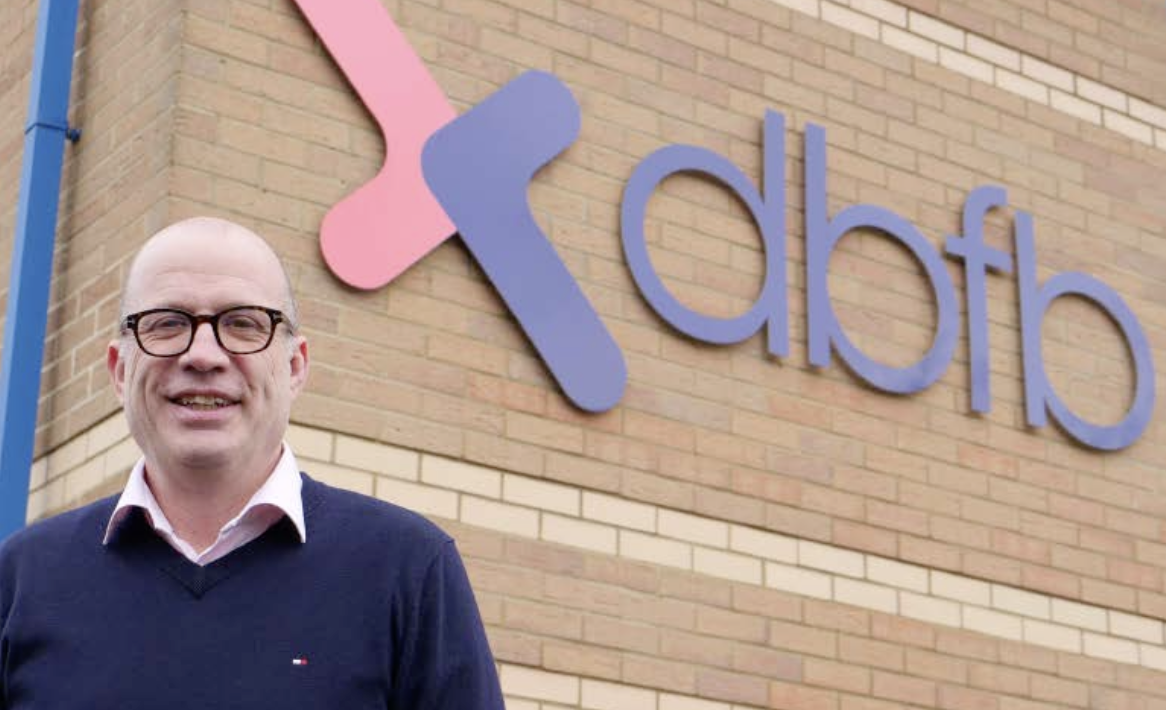
….dbfb is an independent provider of business telephony, connectivity and IT solutions, as well as consultancy and support, to SMEs, enterprises and the public sector.
Established by Brian Kingston and Bill Oliver in 1998, under the name Database for Business, it started out specialising in mobile phones and airtime before expanding its offering to include connectivity, cloud telephony, managed print services and comprehensive IT solutions from market-leading vendors.
The company’s status as an independent technology provider enables it to create tailored, multi-vendor solutions, while its preference for acquiring products and services on a wholesale basis gives
it the flexibility to set its own pricing and contract terms.
Under the leadership of Simon Pickering, who joined the company as Managing Director in 2016, dbfb has expanded its product and service offering to meet the needs of enterprises and the public sector as well as its core SME base, increasing its turnover from £2.5 million in 2018 to £13 million today and its headcount from 12 to 57.
It is also extending its geographical reach from its roots in Northamptonshire to the M62 corridor, to which end it is opening a new office in Manchester and has just appointed Rugby League legend Paul Sculthorpe MBE as Director to head up its Northern team (see page 42 for more details).
Here, Simon Pickering gives his view from the channel.
Technology Reseller (TR): How’s business? Better or worse than 12 months ago? And how confident are you about the future?
Simon Pickering (SP): Business is better than it was 12 months ago. We are still growing organically, we are seeing strong growth in the SME sector and Enterprise continues to grow – and we are confident about the future because we have a robust organic plan we will deliver on.
That said, significant challenges remain. Over the last two years, inflationary pressures have led to price increases for customers, who have become more financially conscious as a result. During renewals, despite delivering excellent service, we’re seeing a shift towards headline pricing versus full contract costs. Whether this approach works long-term remains to be seen.
The last budget has complicated matters further because while we are optimistic from an organic growth perspective, managing the cost of running the business, particularly the cost per head, remains challenging. Passing these increased costs on to customers just won’t work.
Major suppliers like BT, Vodafone, EE and O2 have already signalled price increases that are likely to be more significant than the modest adjustments in April that we were anticipating. We’re now focused on understanding the impact of these increases and what we can reasonably absorb.
Technology remains a priority. We’re exploring ways to help our existing staff work more efficiently, especially through AI – not for customer-facing interactions but to help our teams perform faster without compromising service quality. This has probably brought our previous plans forward by three years.
That said, slowing recruitment has put more pressure on existing staff, so we’ve taken steps to prioritise their wellbeing, with a profit share scheme, increased annual leave allowances and added health benefits. Retaining a motivated, healthy workforce is critical but these hidden costs do add up. Running costs for our 57 staff have risen by 3% or £80,000 a year.
TR: In what areas are you experiencing strongest demand?
SP: We’re in a unique position as we wholesale all our products, which allows us to offer flexible contracts. This flexibility is increasingly in demand. Given the uncertain economic outlook for the next three to five years, businesses want contracts that are adaptable – if their demand drops, they need a partner who will work with them and accept adjustments without locking them into rigid terms.
Amongst SMEs, we are seeing strong demand for leveraging technology to enhance their operations. Even so, many businesses are struggling to get the most out of tools like Copilot because they don’t fully understand how to use them effectively. We must make sure a business is getting the best out of the technology they pay for and that it actually meets the customer’s expectations.
In Enterprises, the demand is for a blend of flexible contract terms and superior service that supports their business needs. Unlike larger mobile operators and hosted voice platforms, we’re small and agile enough to deliver personalised solutions that meet these requirements, giving us
a significant advantage.
TR: What recent wins are you most proud of?
SP: Over the past 12 months, I’m most proud of our ability to retain nearly every customer we have looked to renew. Our strong renewal rate is testament to our service model, contract flexibility and competitive commercials, all of which continue to set us apart.
TR: Where is business proving most difficult?
SP: Our biggest challenge is people. As a managed services business, we rely heavily on platforms and people, but finding and retaining the right talent is increasingly difficult. There’s a significant shortage of key skillsets, and evolving policies like Angela Rayner’s proposed changes are adding to the pressure.
For example, hiring a university graduate will soon necessitate paying them £25,000 a year with full workers’ rights from day one (I believe this is coming). This will push businesses towards hiring experienced candidates instead, as they offer greater predictability and less risk, despite higher costs. Unfortunately, this could penalise younger people, as businesses become more cautious about recruiting school or university leavers.
Apprenticeships are also becoming harder to justify due to the significant demands they place on employers. While our preference is to mould new talent into the business, this approach is challenging with limited resources. Younger employees need more support and guidance, and we don’t have an endless pool of staff to provide that level of oversight.
Skills gaps are widespread. Finding strong candidates for customer service, operations or technical roles is nigh-on impossible, and competition for talent has driven salaries higher, creating unhelpful rivalries between businesses.
Technology will play a critical role in enabling us to address these challenges. If implemented effectively, it could enable us to handle 20-30% more business without needing additional hires, allowing us to grow sustainably despite ongoing recruitment difficulties.
TR: How have you changed/are you changing business operations to exploit new opportunities?
SP: We continue to seize new opportunities. In our first 24 years, we were primarily SME-focused with a few Enterprise accounts, but that’s shifted significantly in the past 24 months.
In addition, we’ve recruited Stuart Smith to head up Public Sector, enabling us to explore opportunities in that space, even if navigating public sector frameworks remains challenging due to bureaucracy. The Government could assist by simplifying processes and revising scoring mechanisms, which are overly weighted towards cost rather than the social and environmental benefit SMEs can deliver. Supporting local SMEs that give back to their communities would be a positive step.
We’ve also appointed Mark Gradner as Acquisition Director for Enterprise and partnered with Paul Sculthorpe in the north, targeting the M62 corridor as a key area of opportunity. Looking ahead, acquisitions will be part of our growth strategy in the coming years.
TR: What do you see as the biggest challenges facing channel businesses today?
SP: We all have our own challenges, but people are a significant one. So too are the expectations of customers and finding a balance between what customers expect and what they are prepared to pay – a lot of the big vendors go out promising prices that you cannot believe they are delivering. People, price and customer expectations are the three key areas where pressures are rising.
What we must all realise is that you cannot expect an SME business owner to embrace all the technology changes that are happening: they run their own business, they are not a technology house, and they are going to need support. The challenge for channel businesses is how to deliver that support at the right price.
TR: Could vendors and distributors do more to help you overcome these challenges? And if so, what?
SP: Yes. Particularly in technology, vendors could be more flexible. Instead of rushing generic incentive programmes, they should tailor them to align with resellers’ needs. For instance, supporting the addition of a dedicated resource to train end-user businesses would create stronger strategic alignments. Moving away from a ‘one-size- fits-all’ approach and understanding a reseller’s growth plans would provide far more valuable support.
TR: Are customers becoming more demanding, and if so, in what ways?
SP: Yes, largely due to the explosion of everyday technology and the ‘now, now, now’ culture it has created. If I order something from Amazon today and it’s not here tomorrow, I wonder why? This instant gratification mindset has shaped expectations, but the technology sector, including major vendors, hasn’t kept pace.
Take Openreach as an example: if a connectivity line goes down, it can take up to 20 days to fix. In today’s world, no business finds that acceptable. We’ve had to develop innovative solutions to keep our customers operational during such downtime. Is it right that the costs associated with that should fall on us? 100% no.
Vendors must look at their business models, join the twenty-first century and recognise that connectivity is essential, that people expect it to work and that if it goes down, they expect it to be fixed quickly, not when the vendor feels like it.
Customers expect consumer-level service in business, especially SMEs. When something goes wrong, they expect it to be resolved almost immediately. Enterprise customers are less demanding and public sector clients are the most relaxed. But overall, the bar for expectations is higher than ever.
TR: If you could change one aspect of your job, what would it be and why?
SP: I wouldn’t change anything in my role because I enjoy the challenges thrown at us every day. What I like about my job are the variation and, from a people perspective, developing my management team. We are an exciting, growing business so there’s nothing I would like to change.


Be First to Comment