

Grid connection queues identified as the “single biggest blocker” to UK AI expansion.
New regulatory reforms from Ofgem and NESO prioritize “ready” and “strategically aligned” data centres.
AMD EPYC™ processors positioned as the critical lever for “useful work per watt” in power-constrained environments.
In the race to build the future of AI, and the shift to inferencing, the industry is at risk of overlooking a critical component: the CPU. Today, Hammer Distribution and AMD are pivoting to a ‘CPU-first’ strategy not just as a technical choice, but as a survival tactic for UK businesses trapped in the ‘time-to-power’ crisis. This partnership aims to prove that the secret to unlocking AI isn’t more power, but better management of the power we already have.
As global compute demand is projected to rise 100x over the next five years, the UK’s AI ambitions are hitting a physical limit. Recent government papers and regulatory decisions from Ofgem and the National Energy System Operator (NESO) have confirmed that grid capacity is now the primary bottleneck for data centre expansion. Under the new December 2025 reforms, “zombie projects” are being cleared from the queue to prioritize infrastructure that is both strategically aligned and hyper-efficient.
The CPU: The Hidden Governor of AI ROI
While much of the AI conversation today centres on GPUs and model training, Hammer and AMD are highlighting that the CPU (Central Processing Unit) is the component most responsible for whether an AI stack behaves like a high-throughput pipeline or an expensive queueing system. As the world moves to exploiting models through inference, they also pose the question as to whether the GPU is essential for certain workloads?
In a market defined by hard power envelopes, inefficiency is no longer a technical nuisance, it is a project-killer. The correct approach to selecting the appropriate tools is essential, making effective use of every available watt. Mismatched CPUs and unnecessary accelerators mean power is wasted, and cost-per-outcome rises.
“The next phase of AI isn’t constrained by model ambition so much as power availability and system efficiency,” said Adam Blackwell, Director of AI, Server and Advanced Technology at Hammer Distribution. “By optimizing the CPU’s role in the AI pipeline, from data ingest to inference, we are enabling our partners to deliver viable AI solutions that fit within today’s strict European energy reporting and power constraints.”
CPU-Led Inference: A Strategic Economics Tool
For many enterprise workloads, such as document workflows, search augmentation (RAG), and summarization, AMD EPYC™ processors offer a more sustainable path to deployment. AMD’s guidance also suggests that CPU-first inference is viable for models up to 20B parameters, allowing organizations to:
- Reduce Accelerators: Targeted use for massive training tasks.
- Reduce Power Footprint: Operate latency-tolerant workloads at a lower total cost of ownership (TCO).
- Bypass Connection Delays: Deploy AI on existing infrastructure without waiting for massive grid upgrades.
Meeting New European Standards
The shift comes as the European Commission’s Energy Efficiency Directive introduces mandatory reporting for data canter performance. As efficiency becomes a measurable KPI, the ability of a CPU to maximize system utilization ensuring every watt consumed produces “useful work” is becoming a prerequisite for infrastructure investment.
Navigating the AI Power Crisis
| The Challenge | The “CPU-First” Strategy | The Business Impact |
| Grid Lock (The Queue) | Optimizing the CPU reduces the total “power ask” for new projects. | Faster Approval: Shovel-ready, efficient designs move to the front of the queue. |
| Efficient Accelerator Use | High-performance CPUs keep GPUs “fed” with data 100% of the time. | Higher ROI: No more paying for expensive GPUs to sit around waiting for data. |
| Enterprise Workloads | Moving 10B–20B parameter models (search, summaries) to the CPU. | Cost Control: Reduces the number of power-hungry GPUs.
|
| Regulation (EC EED) | Meeting strict new EU/UK reporting on “work per watt.” | Future-Proofing: Ensures hardware remains compliant with green energy laws. |
Hammer Distribution (formerly Exertis Enterprise) is a specialist value-added distributor with over 30 years of experience in data storage and server markets. Hammer works with world-class vendors to provide end-to-end infrastructure solutions to the channel across the UK and Europe.
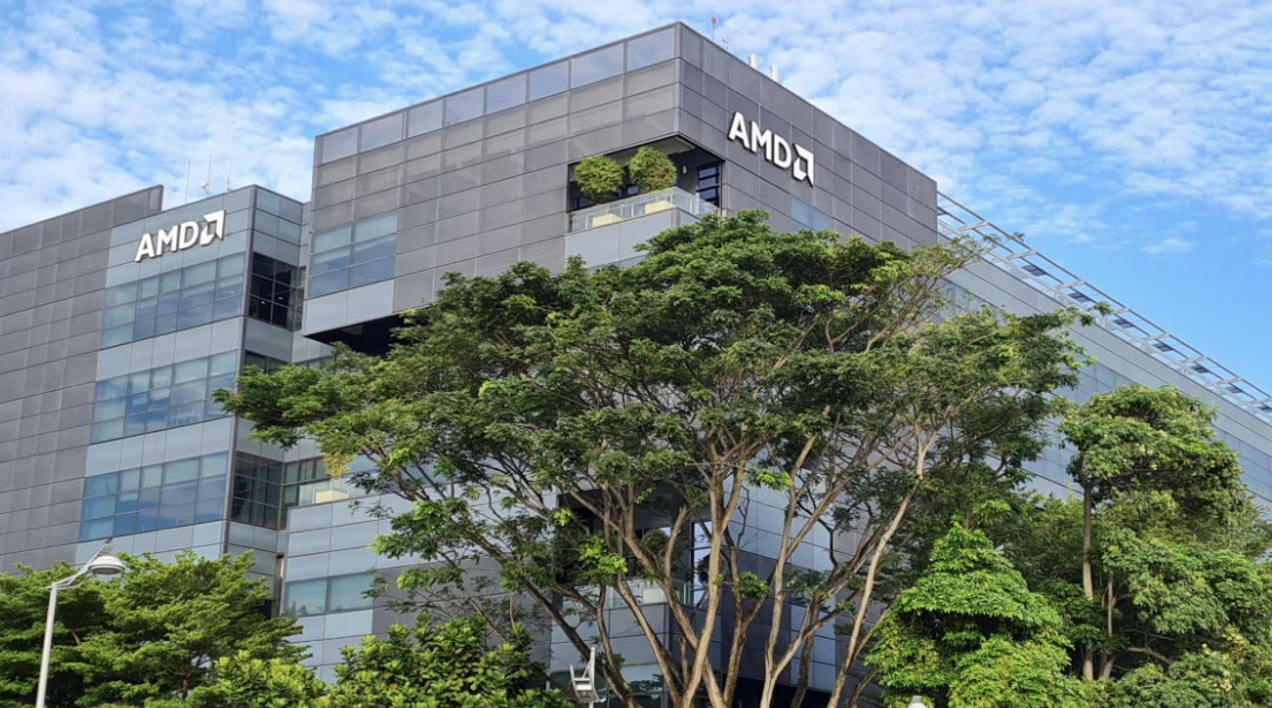 AMD drives innovation in high-performance and AI computing to solve the world’s most important challenges. Today, AMD technology powers billions of experiences across cloud and AI infrastructure, embedded systems, AI PCs and gaming. With a broad portfolio of AI-optimized CPUs, GPUs, networking and software, AMD delivers full-stack AI solutions that provide the performance and scalability needed for a new era of intelligent computing.
Learn more at www.amd.com.


Be First to Comment